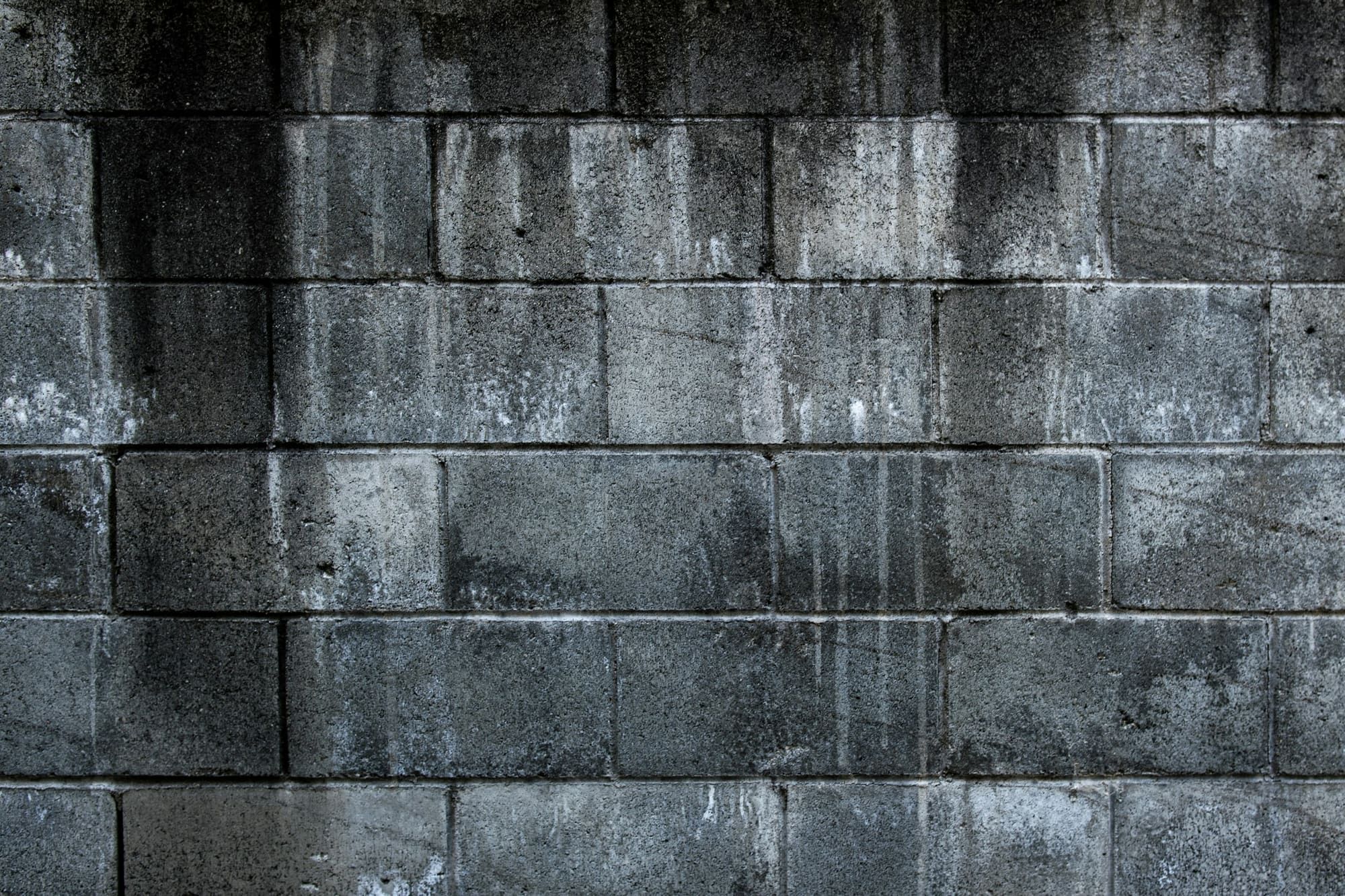
Masonry Foundation Repair in Eau Claire, WI
Cracked and loose block, washed-out fieldstone joints, crumbling parging. We fix the masonry, and we tell you straight when a wall needs an engineer before it needs us.
Serving Eau Claire, Altoona, Chippewa Falls, Lake Hallie, Menomonie, Fall Creek and the surrounding Chippewa Valley
- Block, brick and fieldstone Masonry foundations only
- No piers or anchors to sell So no reason to find you need them
- Free written estimates Scope and price on paper
- Based in Eau Claire Working across the Chippewa Valley
Masonry Foundation Repair in Eau Claire: What a Mason Fixes
A block, brick or fieldstone foundation is a masonry wall that happens to be underground. Most of what goes wrong with one is a masonry problem: cracked units, empty joints, a section knocked out of line.
Search for foundation repair in Eau Claire and most of the companies you find install steel piers, wall anchors and drainage systems. Some walls need exactly that. Many need a few block replaced and the joints repointed, and that option rarely gets mentioned first. Here is the line between the two.
Ours: the masonry
- Cracked and broken block cut out and replaced.
- Open and crumbling joints in block, brick and stone, raked out and repointed.
- Failed sections of wall taken down and rebuilt while the house is held on temporary supports.
- Above-grade courses broken up by frost, downspouts and splash-back.
- Window and beam pockets where block has cracked around an opening.
- Parging removed where it is loose and reapplied.
Not ours: structure and water systems
- A wall that is still moving. A structural engineer decides what it needs.
- Piers and underpinning for a footing that is sinking.
- Wall anchors, steel beams and carbon fiber for a wall that is bowing in.
- Crack injection in poured concrete walls.
- Drain tile, sump pumps and membranes for a basement that takes in water.
- Regrading and gutters. We will point at them, because they are behind a lot of this, but a landscaper or gutter company does the work.
Block Foundation Repair: Cracked, Shifted and Loose Block
Concrete block is strong when it is squeezed from above and weak when it is pushed from the side. Wisconsin's dwelling code puts footings at least 48 inches down to get below frost, which leaves most of a basement wall standing in soil that freezes, swells and thaws every year. Where the ground holds water against the wall, that push is harder. The crack pattern tells you which force is winning.
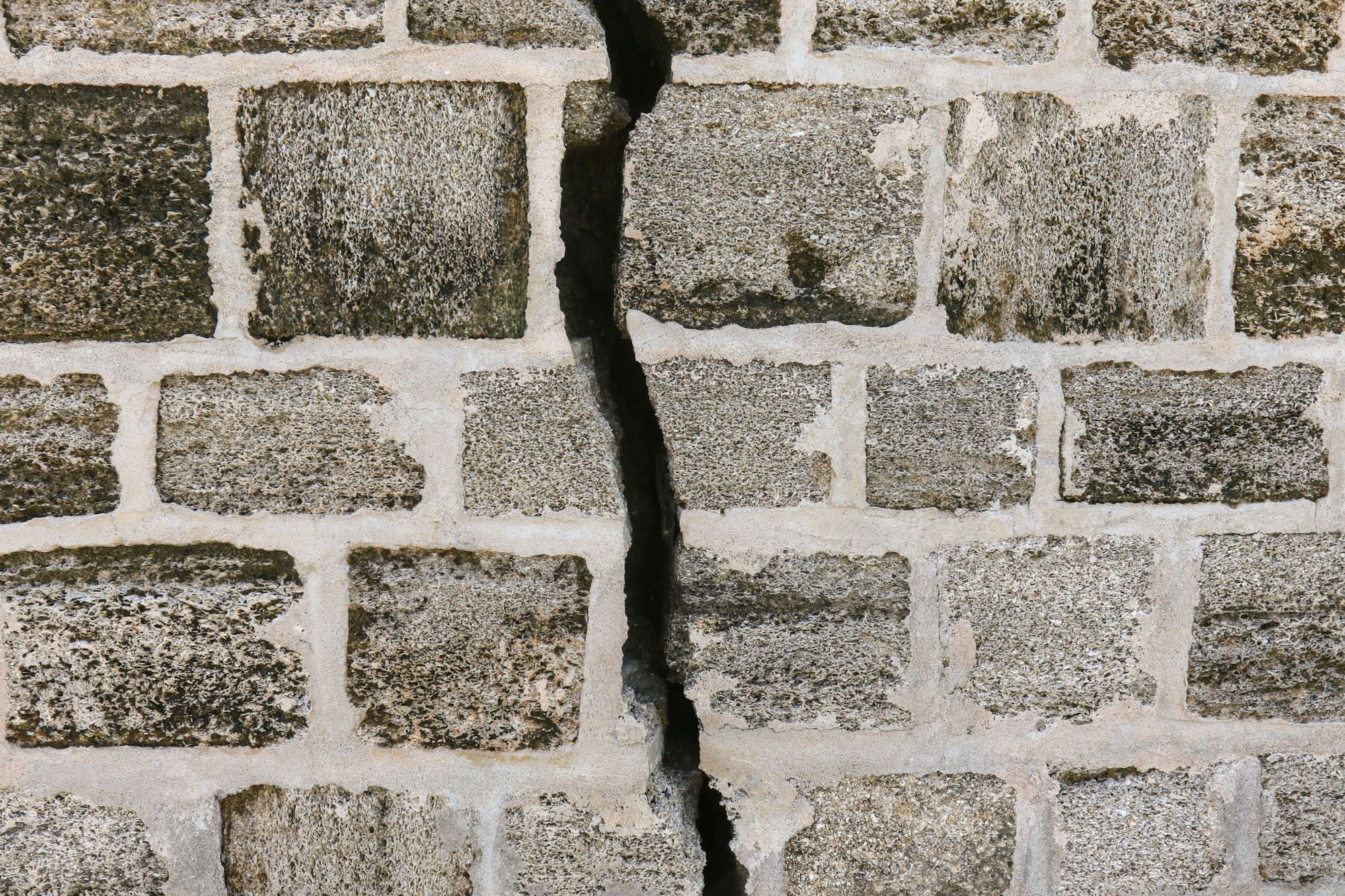
- Vertical hairline crack. Runs straight up through block and joints, the same narrow width top to bottom. Usually shrinkage from when the wall was new. Repoint it and keep an eye on it.
- Stair-step crack at a corner. Follows the joints diagonally. The corner has settled or the wall beside it has been pushed. Even width and no change over a season: a masonry repair. Wider at one end or growing: an engineer first.
- Horizontal crack along a joint. Typically a few courses below the outside grade line or near mid-height, and the one to take seriously. Soil or frost is pushing the wall inward and the joint has hinged.
- Block shifted or sheared. The wall has slid in on a lower course, or the top leans in. Hold a level against it. Any lean you can measure means the wall has moved, and patching the crack will not move it back.
Rebuilding a Section of Block Wall
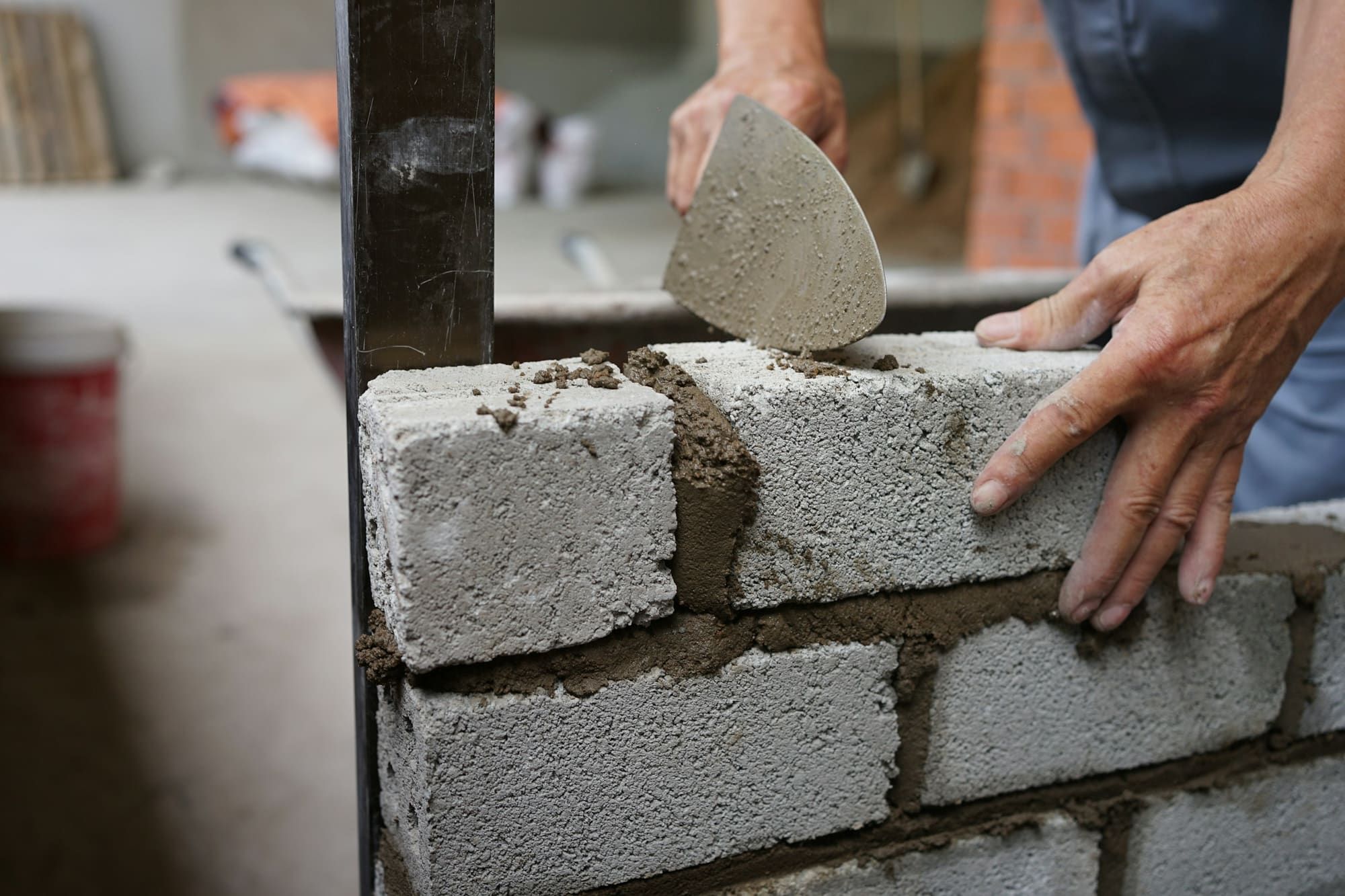
When block is broken through, crushed at the bottom course or pushed too far out of line to repoint, the section comes out. The floor above is carried on temporary posts and a beam, the soil outside is dug back if the wall has to be worked from both faces, and new block is laid to the line of the sound wall on either side.
Wisconsin's code for new homes calls for foundation walls to have lateral support at the base, from the floor slab or framing, and at the top, where the sill plate is anchored to the wall. Older basements often have neither done well, so a rebuilt section is the time to anchor the sill properly and fill the block cores with grout and steel where an engineer asks for it.
Inside the city, structural repairs fall under the Inspections Division's general rule that altering or repairing a building takes a permit. We confirm what your address needs before work starts.
Is the Foundation Wall Still Moving? Find Out Before You Pay Anyone to Fix It
Draw a pencil line across each end of the crack and write the date beside it. Measure the widest point and write that down too. Check it again after a winter. A crack that has not grown and a wall that is still plumb is usually a masonry repair. One that has grown is a job for an engineer, and you will have the measurements they ask for.
Fieldstone and Brick Foundations on Older Eau Claire Homes
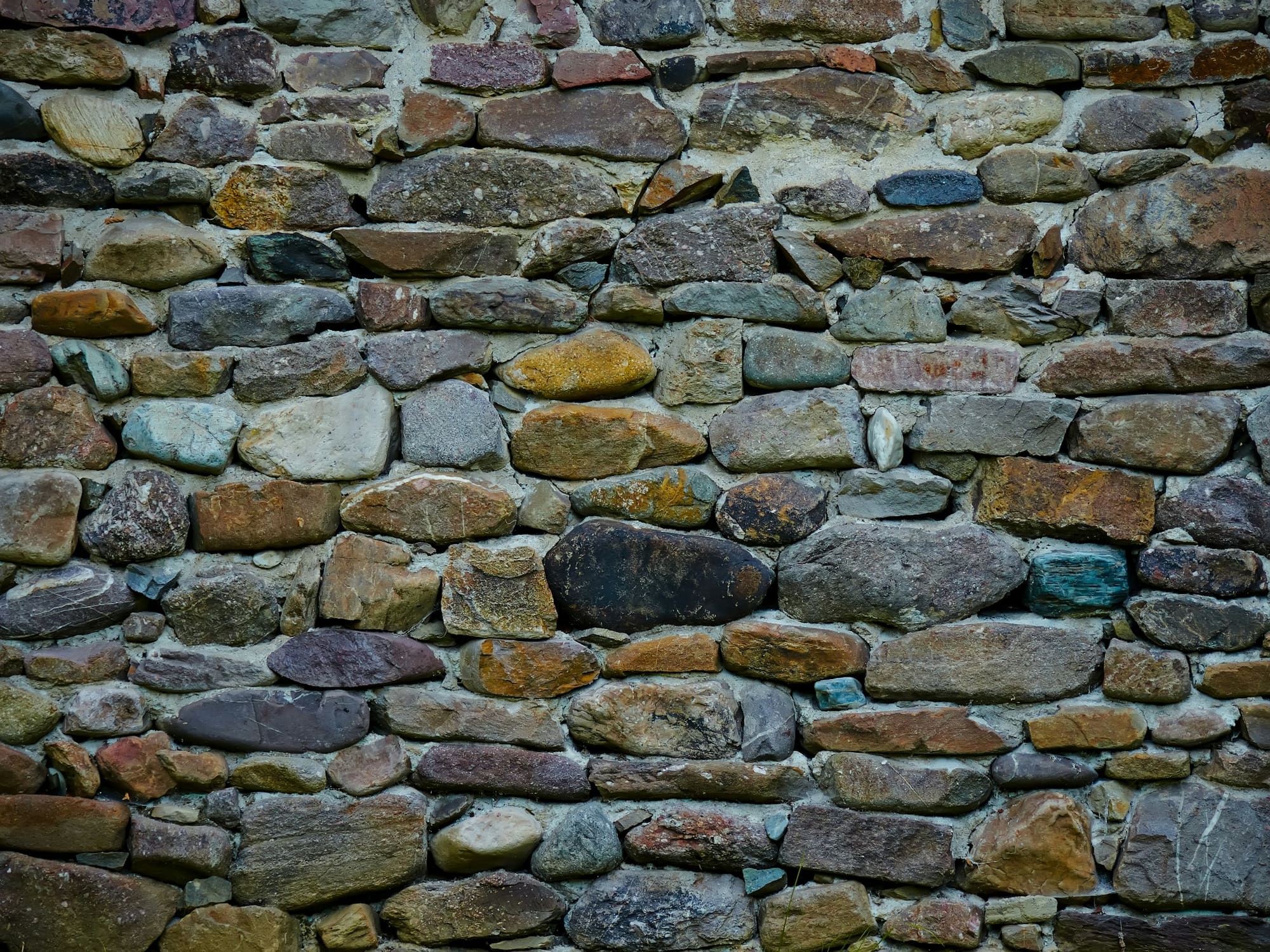
Census estimates say close to one in five Eau Claire homes was built before 1940, and under the older ones, in the Third Ward, Randall Park and the blocks around downtown, the foundation is often mortared fieldstone or brick. These walls are a foot and a half thick or more and were laid in lime mortar, which is soft on purpose. After a century of damp, the lime leaches out and the joints turn to sand you can rake out with a finger.
The stone is almost never the problem. The repair is repointing: raking the joints back to firm mortar, packing new mortar in deep, and doing it a few feet at a time so the wall is never left hollow.
- Soft mortar, not hard. The National Park Service's repointing guidance says new mortar should be softer and more permeable than the masonry and no harder than the original. Straight portland cement in a fieldstone wall traps water behind a hard skin, and the old mortar behind it rots faster.
- Both faces if we can reach them. The inside is easy. The outside above grade matters more, because that is where rain and splash-back get in.
- No sealing paint. Waterproofing paint on the inside of a stone or brick foundation peels within a few years and holds moisture in the wall while it lasts. These walls stay healthy by drying to the basement.
- Brick foundations get the same treatment, plus replacement of brick that has spalled at the grade line where snow sits against it.
Mortar types and how joints are packed are covered in detail on our tuckpointing page for brick, stone and foundation walls. Where a brick wall above the foundation has cracked along with it, see brick repair and section rebuilds.
Foundation Parging: What It Does and What It Doesn't
Parging is a coat of portland cement mortar, roughly three eighths of an inch thick, troweled over the face of a block or stone wall. On the part of your foundation that shows between the siding and the lawn, it is the smooth gray finish that is probably cracking and falling off in sheets.
What parging does
- Covers block joints and rough stone with one even surface.
- Protects the mortar joints behind it from rain and splash-back.
- Sheds surface water, so the wall takes on less of it.
- Gives a dampproofing coating something smooth to stick to below grade.
What it doesn't do
- Waterproof a basement. Water under pressure goes straight through it.
- Hold a wall together. It has no structural strength.
- Hide a moving crack. The crack prints through within a season.
- Stay on a wet wall. Moisture pushing out from behind is what pops it off.
Wisconsin's dwelling code makes the distinction itself. On new block foundations its standard detail is a parge coat at least three eighths of an inch thick from the footing to finished grade, and then a separate dampproofing coating applied over the parging. The parge coat is the base. It was never the waterproofing.
So if your basement leaks, new parging will not fix it, and we won't sell it to you as if it would. What reparging does well is protect sound masonry and make the exposed foundation look cared for. Loose parging comes off first, the joints behind it get repointed where they need it, and the new coat goes on over a clean, dampened wall. Skimming new mortar over old loose parging is why so many parge jobs fall off after two winters.
How a Masonry Foundation Repair Goes
Most of the job is working out what not to disturb.
-
Find out if it is moving
Crack widths measured, the wall checked for plumb, the outside looked at for the water source. If the answer is unclear, an engineer comes first.
-
Carry the house
When block has to come out under a load, temporary posts and a beam hold the floor above before the first unit is removed.
-
Rebuild in short sections
Damaged block out, new block laid in full mortar beds and tied into the sound wall each side. Stone and brick walls are raked out and repointed a few feet at a time.
-
Cure, coat and clean up
Mortar gets its cure time before the shoring comes out. Parging goes on last. You get a plain list of anything outside, like gutters or grading, that will undo the repair if left.
Foundation Repair Cost for Masonry Work in Eau Claire
Foundation repair prices online swing from a few hundred dollars to tens of thousands because they mix two different trades. These are national figures from HomeAdvisor, typical ranges and not quotes, sorted by who does the work.
| Work | Typical range | What to know |
|---|---|---|
| Foundation crack repair | $250–$800 | HomeAdvisor’s figure for minor cracks. For masonry that means raking out and repointing, or replacing a few block. |
| Repointing foundation joints | $5–$25 per sq ft | HomeAdvisor’s tuckpointing range. Low headroom, deep joints and stone walls push it up. |
| Structural engineer’s visit | $340–$780 | Paid to the engineer, not to us. Cheap next to fixing the wrong thing. |
| Bowing wall reinforcement | $4,000–$12,000 | Carbon fiber or steel, installed by a foundation specialist. Not our work. Listed so you know the scale. |
| Foundation sealing | $2,500–$8,200 | Specialist work. The same guide lists waterproofing at $2,000–$7,000. Also not ours, and not the same thing as parging. |
Sources: HomeAdvisor foundation repair cost guide (updated June 20, 2026) and tuckpointing cost guide (updated June 2026). National ranges, checked October 2026. Neither guide publishes a figure for parging or for rebuilding a section of block wall, so we don't print one. Both are priced from the wall itself.
Foundation Repair Questions From Eau Claire Homeowners
How much does foundation repair cost in Eau Claire?
It depends entirely on which kind of repair you need. HomeAdvisor's national guide puts minor foundation crack repair at $250 to $800 and tuckpointing at $5 to $25 per square foot, which is the range for masonry work like ours. The same guide's overall average of $5,174 is pulled up by structural jobs such as bowing-wall reinforcement at $4,000 to $12,000. Those are national figures, not quotes.
Is a horizontal crack in a block basement wall serious?
Treat it as serious until someone qualified says otherwise. A horizontal crack along a mortar joint means soil or frost pressure has pushed the wall inward far enough to hinge it. If the wall is still plumb and the crack has not changed in years, repointing and fixing the drainage outside may be all it needs. If the wall leans in or the crack is widening, it needs an engineer and reinforcement before any masonry repair.
Does parging waterproof a basement wall?
No. Parging is a thin coat of portland cement mortar that protects block and stone and sheds some surface water. It is not a waterproofing layer, and it cracks if the wall behind it moves. Wisconsin's dwelling code treats the two as separate steps on new block foundations: parging first, then a dampproofing coating applied over it.
Can a fieldstone foundation be repaired, or does it have to be replaced?
Most can be repaired. A fieldstone wall is thick, and when it looks bad the usual problem is mortar that has turned to sand and fallen out of the joints, not the stone. Raking the joints out and repointing them with a soft, lime-rich mortar puts the wall back to work. Replacement only comes up when stones have fallen out of the wall or a section has bulged and lost its shape.
Do you install piers, wall anchors or basement waterproofing?
No. We do the masonry: replacing block, rebuilding sections, repointing stone and brick, and parging. Piers, helical anchors, wall anchors, carbon fiber straps, crack injection in poured concrete, drain tile and waterproofing membranes belong to foundation repair and waterproofing companies. If your wall needs one of those first, we will tell you so.
Do I need a structural engineer before a mason?
If a wall is leaning, bulging, or has a crack that keeps opening, yes. HomeAdvisor lists a structural engineer's fee at $340 to $780. An engineer who sells no repairs tells you whether the wall needs reinforcing or only needs masonry work, and puts it in writing. For stable cracks, worn joints and surface damage you can start with us.
Can foundation masonry be repaired in winter?
From the inside, often yes. A heated basement stays warm enough for mortar to cure, so interior repointing and block replacement can go ahead in January. Work on the outside face of the wall is different, because it needs the soil dug back and mortar curing in the open, and that waits for spring.
Get a Free Foundation Masonry Estimate
Tell us what the wall is made of if you know, where the crack or loose area is, and how long you have been watching it. Photos from inside the basement and of the same spot outside help.
- We check the wall for plumb and measure the cracks
- You hear plainly if it needs an engineer first
- The masonry scope and price come in writing
Related Masonry Repairs
-
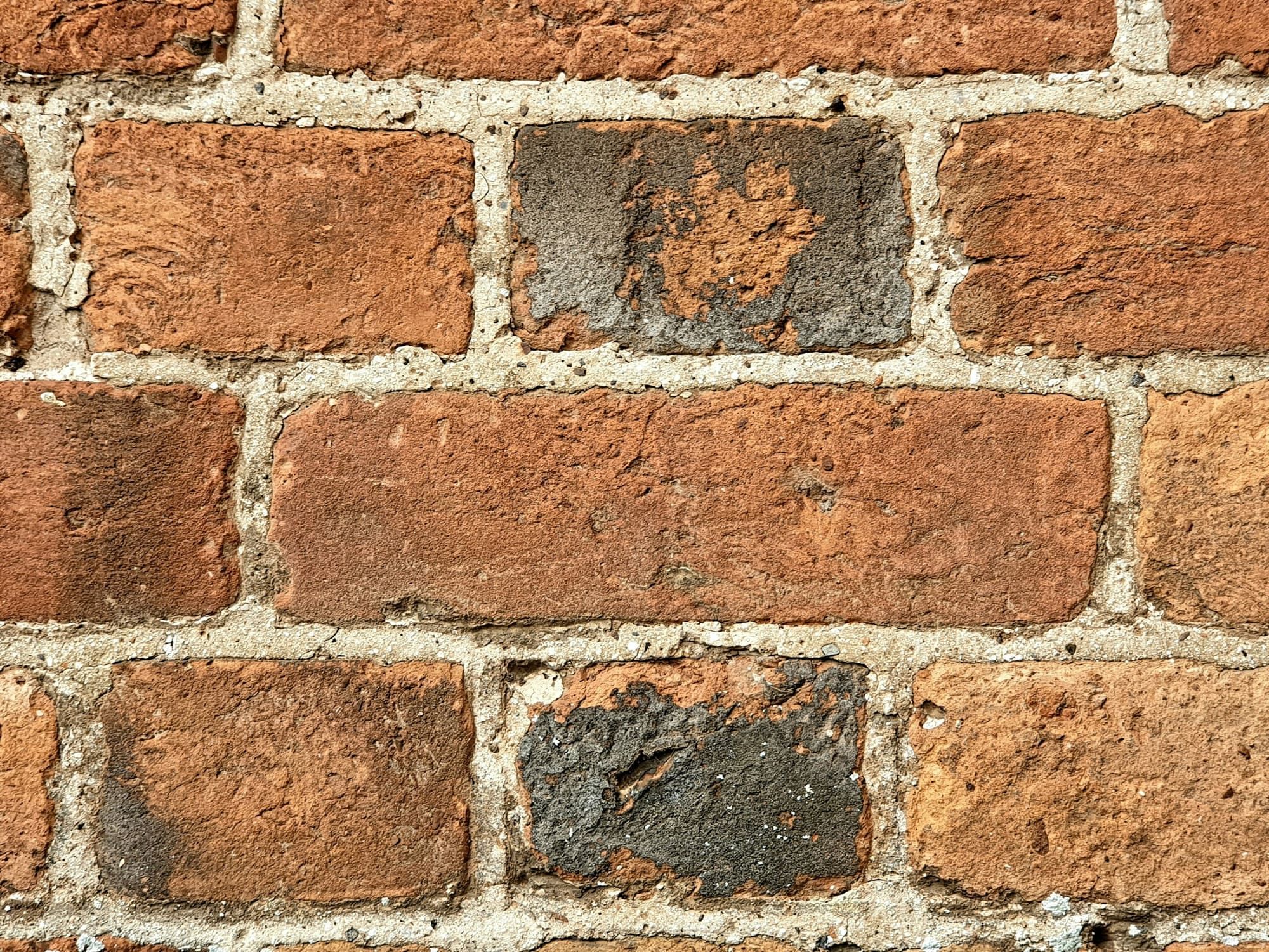
Tuckpointing
Repointing is most of the work on a fieldstone or brick foundation. Mortar choice decides how long it lasts.
-
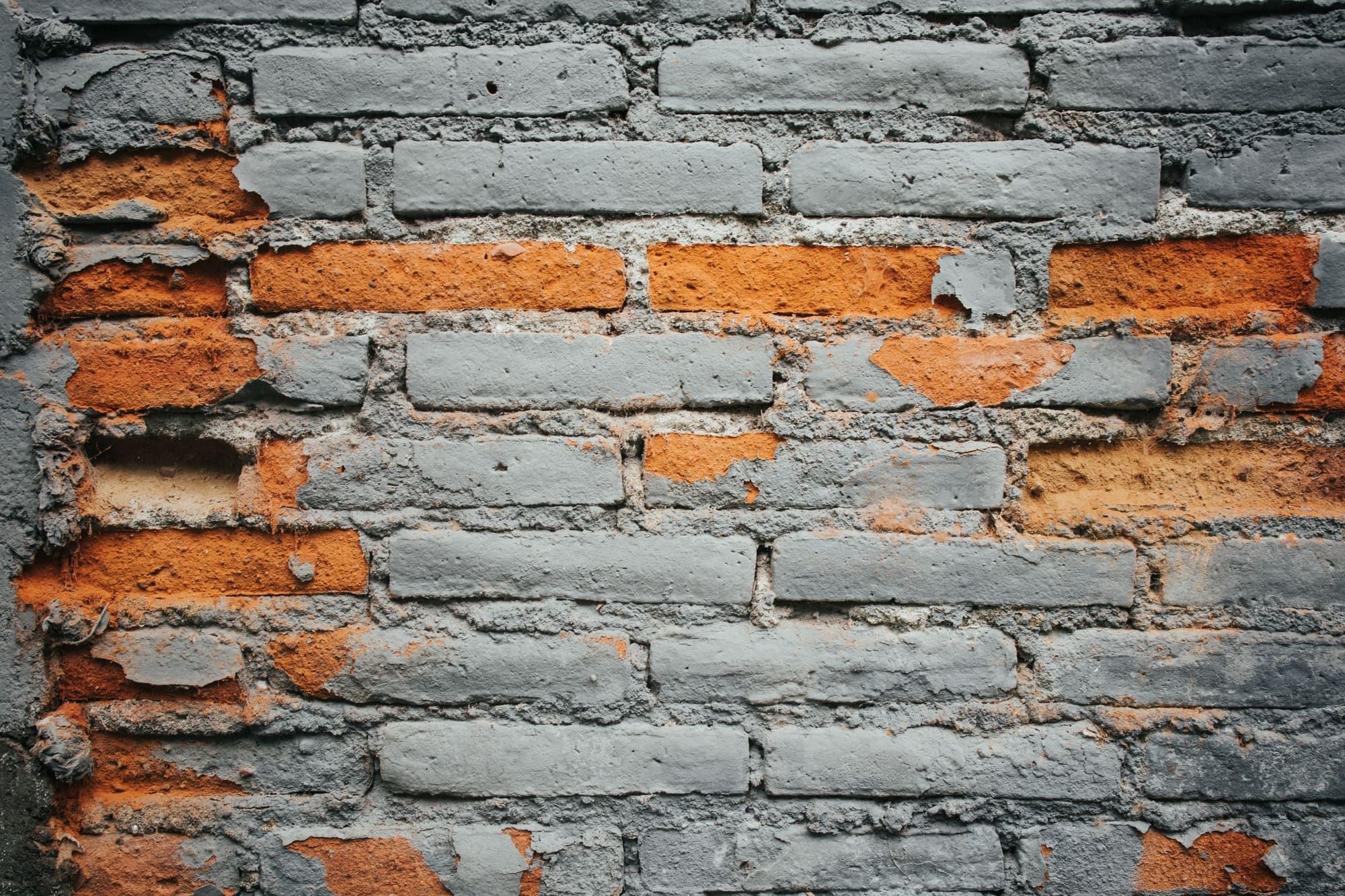
Brick Repair & Restoration
A stair-step crack in the brick above often traces back to the foundation wall beneath it.
Watching a Crack in the Basement Wall? Let's Find Out What It Is.
Call, text a photo with something in the frame for scale, or send the form. More ways to reach us are on the contact page, and the rest of our work is on the Eau Claire masonry contractor home page.